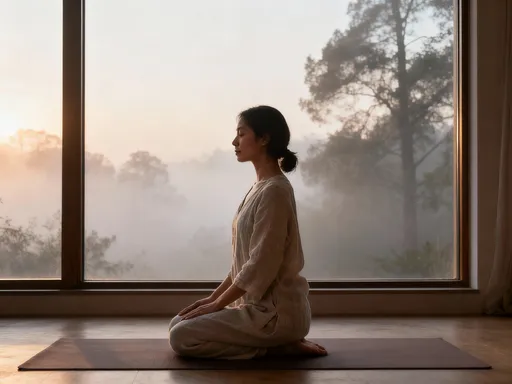
Why I Swear by Morning Yoga and Quiet Mind Rituals for Everyday Balance
Have you ever felt physically fine but emotionally drained, like your body’s running on empty? I did—until I blended simple yoga moves with quiet meditation, rooted in traditional Chinese wellness principles. No magic, no extreme changes. Just small, daily practices that helped me feel more grounded, energized, and in tune with my body. This is what body maintenance truly means to me: not fixing what’s broken, but honoring what’s already there.
The Hidden Cost of Modern Life on the Body
Modern life moves fast, and the human body often pays the price in quiet, cumulative ways. Many women between 30 and 55 find themselves managing multiple roles—caregiver, professional, partner, household manager—without a clear moment to pause. The result is not always injury or illness, but a slow erosion of vitality. Persistent fatigue, low-grade tension in the shoulders and neck, difficulty focusing, or trouble falling asleep are not just inconveniences. They are signals from the body that balance has been disrupted.
In traditional Chinese medicine (TCM), health is seen as a dynamic state of harmony between internal systems and the external environment. When this balance is disturbed, symptoms arise—not as punishment, but as communication. One core concept in TCM is Qi, the vital energy that flows through pathways in the body known as meridians. When Qi becomes stagnant or depleted—often due to stress, poor sleep, or prolonged sitting—physical and emotional discomfort follows. For example, tightness in the upper back may reflect not only poor posture but also emotional holding, especially related to responsibility and worry.
The organ clock in TCM further illustrates how timing affects well-being. Each organ system is believed to be most active during a two-hour window in the 24-hour cycle. The liver, for instance, is most active between 1 and 3 a.m., a time when the body is meant to be in deep rest for detoxification and renewal. If sleep is interrupted during this phase, the liver’s ability to process emotional and physical toxins may be compromised. Similarly, the lung hours (5–7 a.m.) are associated with release—both physical, like bowel movements, and emotional, like letting go of what no longer serves. When mornings are rushed, this natural rhythm is overridden, contributing to a sense of being stuck or weighed down.
These disruptions rarely come with dramatic warnings. Instead, they manifest as a low hum of discomfort—afternoon energy crashes, irritability over small things, or a feeling of being disconnected from one’s own body. Recognizing these signs as part of a larger pattern, rather than isolated issues, is the first step toward meaningful change. The body is not broken; it is asking for attention. And sometimes, the most powerful response is not a drastic intervention, but a return to rhythm, rest, and presence.
Yoga as Movement Medicine: More Than Just Stretching
Yoga is often associated with flexibility or athletic poses, but its true value lies in its ability to support the body’s natural functions through mindful movement. For women navigating the demands of midlife, yoga offers a gentle yet effective way to maintain joint health, improve circulation, and regulate the nervous system. Unlike high-intensity workouts that can deplete energy reserves, a slow, intentional yoga practice replenishes them. It is not about performance, but about alignment—with the breath, the spine, and the internal rhythms of the body.
Three foundational poses, accessible to nearly all fitness levels, can make a significant difference when practiced consistently. The first, Cat-Cow (Marjaryasana-Bitilasana), is a gentle spinal wave performed on hands and knees. Inhaling into Cow pose, the belly drops and the chest lifts; exhaling into Cat pose, the spine rounds and the chin draws toward the chest. This movement lubricates the vertebrae, encourages deep diaphragmatic breathing, and supports the flow of Qi along the spine. It is especially beneficial in the morning, when the body is often stiff from sleep, helping to awaken the central nervous system with care.
Standing Forward Bend (Uttanasana) is another simple yet powerful posture. From a standing position, the torso folds over the legs, allowing the head to hang heavy. This pose releases tension in the hamstrings, lower back, and neck—areas where stress commonly accumulates. By encouraging blood flow to the brain and calming the nervous system, it also supports mental clarity. For those with tight hamstrings, bending the knees slightly maintains the benefits without strain. The key is not how far one folds, but how fully one surrenders into the pose, allowing gravity to do the work.
Legs-Up-the-Wall pose (Viparita Karani) is a restorative inversion that requires minimal effort but delivers profound results. Lying on the back with legs extended vertically against a wall, the body experiences gentle decompression of the spine and improved circulation from the lower extremities. This pose is particularly supportive for women who spend long hours on their feet or seated at a desk. It activates the parasympathetic nervous system, the body’s “rest and digest” mode, which is essential for recovery and hormonal balance. Even five to ten minutes of this pose in the morning or evening can reduce swelling in the legs, ease mental chatter, and signal to the body that it is safe to relax.
When linked with the breath, these movements become more than physical exercises—they become meditative. In TCM, the breath is considered a direct regulator of Qi. Slow, deep inhalations and exhalations help move energy through the meridians, clearing stagnation and restoring flow. Practicing yoga with breath awareness trains the body to shift from a state of constant alertness to one of regulated calm. Over time, this consistency—not intensity—leads to lasting improvements in energy, posture, and emotional resilience.
Meditation Without the Mystique: Stilling the Noise
Meditation is often misunderstood as a practice reserved for monks or spiritual seekers, requiring silence, stillness, and hours of dedication. In reality, meditation can be simple, practical, and deeply accessible. At its core, it is the act of paying attention—on purpose, without judgment. For women juggling responsibilities and mental to-do lists, even five minutes of focused stillness can create measurable shifts in well-being.
One of the most effective entry points is focused breathing. Sitting comfortably with eyes closed, the practitioner brings attention to the natural rhythm of the breath—inhaling, exhaling, pausing. When the mind wanders (as it inevitably will), the practice is not to suppress thoughts, but to gently return to the breath. This simple act strengthens the brain’s ability to regulate attention and reduces the production of cortisol, the primary stress hormone. Studies have shown that regular meditation can decrease anxiety, improve sleep quality, and enhance emotional regulation—all critical for long-term health.
Another accessible technique is the body scan. Lying down or seated, one slowly moves attention from the toes to the crown of the head, noticing areas of tension, warmth, or numbness without trying to change them. This practice cultivates interoception—the ability to sense internal states—which is often dulled by years of ignoring bodily signals. Over time, body scanning helps women become more attuned to early signs of fatigue or stress, allowing for timely rest before burnout occurs.
Mindful listening is another grounding practice. Instead of focusing on the breath or body, one turns attention to sound—the hum of the refrigerator, birds outside, the rhythm of one’s own breathing. The goal is not to analyze or label sounds, but to experience them fully in the present moment. This form of meditation is especially helpful for those who feel restless sitting in silence, as it provides an external anchor for awareness.
In the framework of traditional Chinese medicine, stillness is not passive—it is an act of preservation. Jing, often translated as “vital essence,” is the finite energy inherited at birth and used throughout life for growth, repair, and reproduction. Modern lifestyles, with their constant demands and digital stimulation, can deplete Jing rapidly. Meditation, by reducing mental noise and promoting deep rest, helps conserve this essential resource. It is not about adding more to the day, but about creating space so the body can restore itself. The early stages may feel awkward or unproductive, but with patience, the benefits become clear: a quieter mind, a calmer nervous system, and a deeper connection to one’s inner rhythm.
How Morning Routines Set the Tone for the Body
The way one begins the day often shapes the entire trajectory of energy, mood, and focus. Many women wake to the sound of an alarm, immediately reaching for their phone, checking messages, and mentally rehearsing the day’s demands. This pattern activates the sympathetic nervous system—the “fight or flight” response—before the body has had a chance to awaken naturally. In contrast, starting the day with gentle movement and mindful stillness signals safety, allowing the body to transition into a state of calm alertness.
From a scientific perspective, the early morning hours coincide with a natural rise in cortisol, which helps promote wakefulness. When paired with intentional practices like yoga and meditation, this hormonal surge can be harnessed productively rather than resisted. Light stretching increases blood flow, delivering oxygen to muscles and organs. Deep breathing stimulates the vagus nerve, enhancing heart rate variability—a marker of resilience and adaptability. Together, these actions prepare the body and mind for the day ahead with clarity and composure.
Traditional Chinese medicine places special emphasis on the early morning hours, particularly 5 to 7 a.m., as the time of the lung and large intestine. The lungs govern Qi and are responsible for taking in fresh energy, while the large intestine is associated with elimination—both physical and emotional. This two-hour window is considered ideal for release: breathing deeply, moving the body, and letting go of what no longer serves. Drinking a glass of warm water upon waking supports this process by stimulating digestion and encouraging bowel movement, aligning with the body’s natural detoxification rhythm.
A simple 15-minute morning routine can integrate these principles effectively. Begin with three minutes of seated breathing: inhale for four counts, hold for two, exhale for six. This extended exhalation activates the parasympathetic nervous system, calming the mind. Follow with five minutes of gentle yoga—Cat-Cow, a forward fold, and a side stretch. Finish with five minutes of silent sitting, focusing on the breath or simply observing thoughts without engagement. This sequence does not require special equipment or a perfect environment. It can be done in pajamas, on a mat, or even in bed.
The key is adaptability. A routine should support life, not become another source of pressure. On busy mornings, even three minutes of deep breathing counts. The goal is not perfection, but consistency. Over time, this practice becomes a non-negotiable act of self-respect—a daily promise to show up for oneself before showing up for others. And in that small commitment, women often find a surprising shift: not just more energy, but a deeper sense of agency and calm.
Listening to Your Body: The Core of True Maintenance
In a culture that often equates self-care with productivity, true body maintenance begins with a radical shift: from achievement to awareness. Instead of asking “How much can I do?” the more important question becomes “How do I feel?” This internal inquiry is the foundation of sustainable well-being. The body communicates constantly—through tension, fatigue, changes in appetite, or shifts in mood. When these signals are ignored, minor imbalances can evolve into chronic issues.
Learning to listen requires practice. One effective method is the daily check-in: a brief pause in the morning and evening to scan the body and emotions. In the morning, ask: Where is there tension? Is my energy low or steady? Am I holding worry in my jaw or shoulders? In the evening: Did I feel supported today? Where did I feel strain? This practice is not about judgment, but observation. Over time, patterns emerge—perhaps low energy after certain meals, or tightness in the neck during stressful work periods. These insights allow for informed choices, such as adjusting posture, taking short movement breaks, or prioritizing rest.
This kind of self-awareness builds trust. When women learn to honor their body’s signals, they develop an inner compass that guides decisions about food, movement, and rest. For example, recognizing that afternoon fatigue is not laziness but a sign of depleted Qi may lead to a nourishing snack instead of caffeine, or a five-minute breathing exercise instead of pushing through. This approach aligns with the preventive philosophy of traditional Chinese medicine, which emphasizes maintaining balance before illness arises.
Moreover, listening to the body fosters emotional resilience. Physical sensations are often linked to emotional states—tightness in the chest may reflect anxiety, while heaviness in the limbs can signal grief or overwhelm. By acknowledging these connections without rushing to fix them, women create space for healing. This is not passive; it is an active form of care. The body is not a machine to be optimized, but a living system that thrives on attention, respect, and rhythm. And in that recognition, maintenance becomes not a chore, but a relationship.
Integrating Tradition with Modern Life
The wisdom of traditional Chinese medicine does not require abandoning modern comforts or adopting a monastic lifestyle. Instead, it offers a framework for making intentional choices within contemporary routines. The principles of balance, rhythm, and prevention are as relevant today as they were centuries ago—perhaps more so, given the pace and demands of modern life.
Natural light, for example, plays a crucial role in regulating circadian rhythms. Exposure to morning sunlight helps synchronize the body’s internal clock, supporting better sleep and stable energy. Simple habits—like drinking tea by a window, walking the dog at sunrise, or eating breakfast outside—can amplify this effect. Similarly, aligning meals with the body’s digestive peaks—lunch as the largest meal, dinner light and early—supports metabolic health and reduces bloating, in line with both TCM and modern nutrition science.
Yoga and meditation do not need to be isolated practices. They can be woven into daily activities. A few deep breaths before answering a phone call, a moment of stillness while waiting for the kettle to boil, or a brief stretch after sitting for an hour—these micro-moments of awareness accumulate into meaningful change. Even walking can become a meditative practice when done with attention to breath and footfall, transforming a routine task into a form of moving meditation.
The goal is not to add more to an already full schedule, but to infuse existing moments with presence. This integration honors both ancient wisdom and modern reality. It acknowledges that women do not have endless time, but they do have choices—small, daily choices that shape long-term well-being. By respecting the body’s natural rhythms and responding with care, they create a life that is not just busy, but balanced.
Building a Practice That Lasts: Small Steps, Real Results
Many women begin wellness practices with enthusiasm, only to lose momentum when life becomes overwhelming. The obstacle is rarely lack of desire, but lack of sustainability. Perfectionism, time constraints, and shifting priorities can derail even the best intentions. The key to lasting change is not intensity, but adaptability.
Habit stacking—a technique that links a new behavior to an existing one—can increase consistency. For example, meditating for three minutes after brushing teeth in the morning ties the practice to an automatic routine. Similarly, doing a few yoga stretches while waiting for the coffee to brew makes use of otherwise idle time. These small anchors make the practice feel less like an obligation and more like a natural part of the day.
Environment also plays a crucial role. Creating a calm corner—a chair, a cushion, a small table with a candle—designates a space for stillness. Even in a busy household, this visual cue can invite brief moments of pause. Keeping a yoga mat unrolled or a journal nearby reduces friction, making it easier to begin.
Motivation will fluctuate, and that is normal. On days when energy is low, a one-minute breath practice still counts. The emphasis is on showing up, not performing. Progress is measured not by duration or difficulty, but by consistency and kindness. Over time, these small acts accumulate into profound shifts—better sleep, improved mood, greater resilience.
True body maintenance is not about achieving a certain look or mastering advanced poses. It is about cultivating a daily relationship with oneself—one built on awareness, compassion, and gentle effort. It is the quiet commitment to listen, to move, to breathe, and to be. In that simplicity lies lasting strength.
True body maintenance isn’t found in drastic fixes, but in daily acts of awareness and kindness. By weaving simple yoga and meditation into life—guided by time-honored wisdom—we don’t just survive. We thrive, one breath, one movement, one quiet moment at a time.